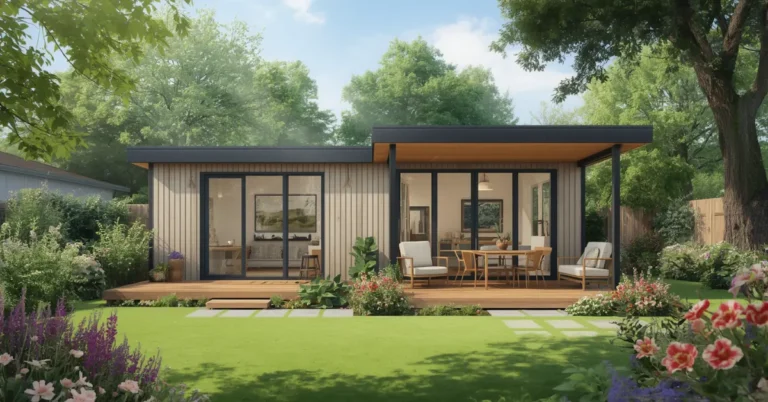
Granny Flat Requirements QLD (2026): Do You Need Approval & What Are the Rules?
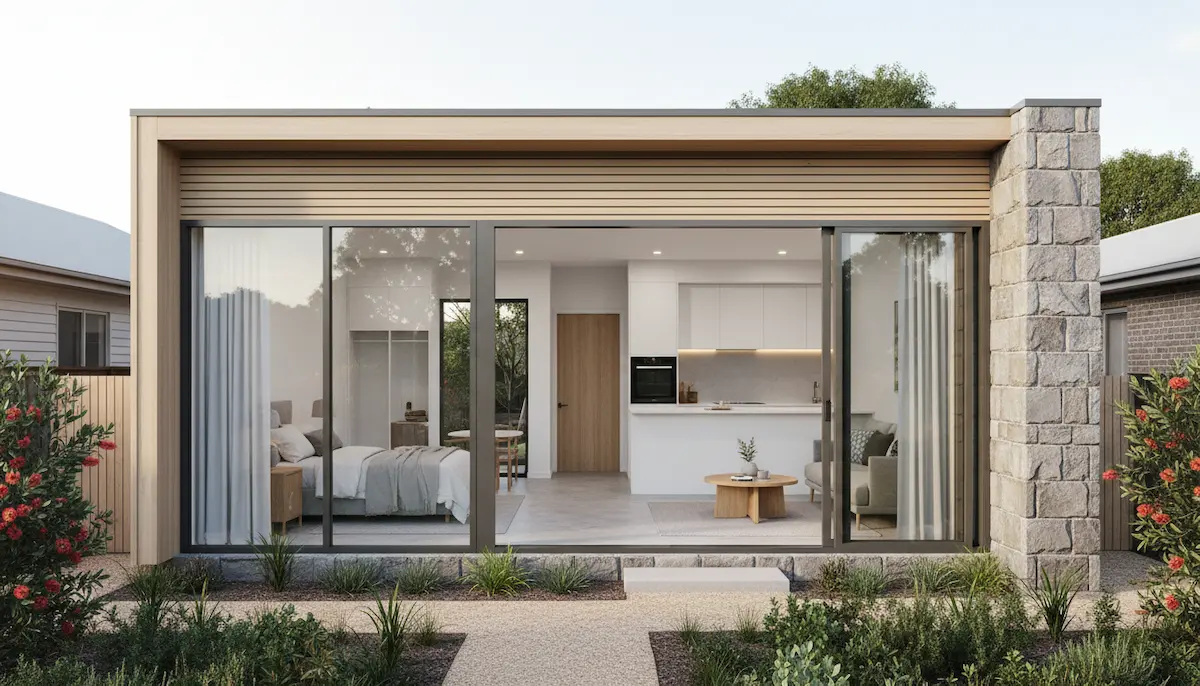
🌿If you’re planning to build a granny flat in Queensland, the first thing you need to understand is the granny flat requirements QLD and whether you actually need approval.
In most cases, yes — the council requires approval, but the exact rules depend on your land size, zoning, and design.
Granny flats are now easier to build and even rent in Queensland, but you still need to follow key limits like size rules, setback distances, and building permits before starting.
In this guide, we’ll break everything down in simple terms, so you know exactly:
- whether you can build one
- What size is allowed
- whether you can rent it in 2026
- And what rules must you follow before construction
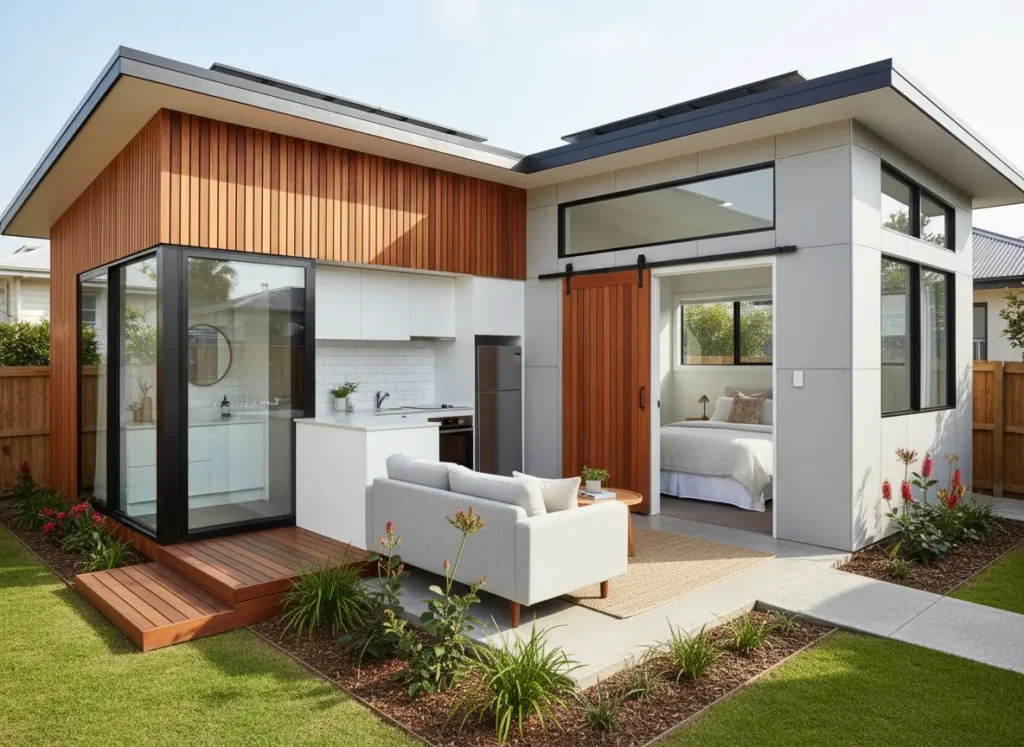
🟢 Do you need approval for a granny flat in QLD?
Yes — in most cases, you do need approval.
But the type of approval depends on your land, zoning, and design.
✔ Simple answer:
You usually need a building permit, and sometimes a planning approval.
📌 What affects approval:
- Your property zoning
- Block size and layout
- Distance from boundaries
- Whether it impacts neighbours
👉 If your design follows standard rules, approval is usually straightforward.
📏 What is the maximum size allowed for a granny flat in QLD?
Most granny flats in Queensland must be between 60 m² and 80 m².
This depends on your local council.
🧾 Size rules table
Rule Type | Requirement |
|---|---|
Maximum floor area | 60–80m² |
Height limit | Around 9.5m |
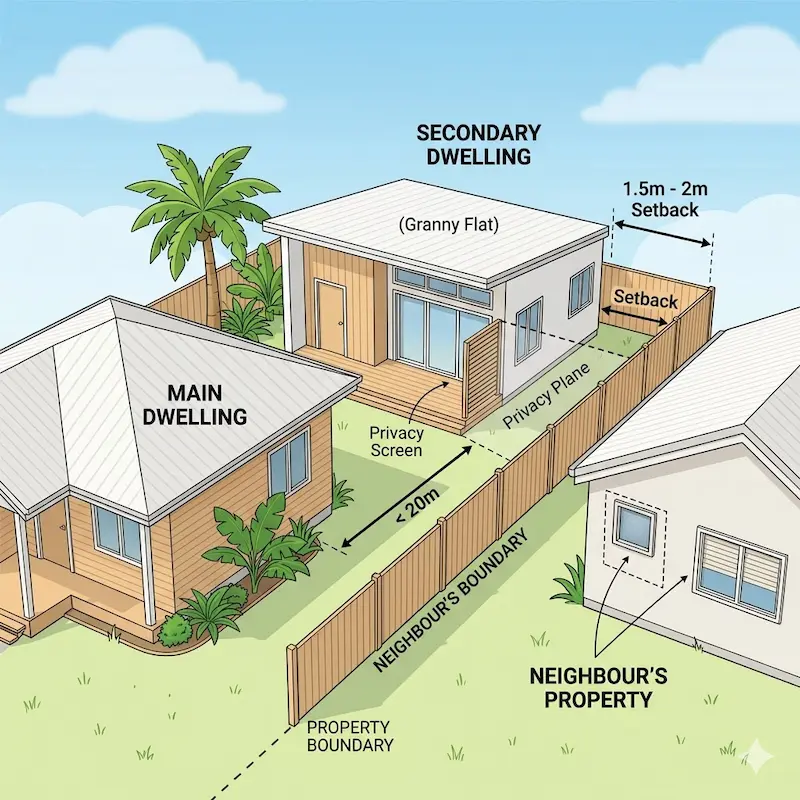
Distance from main house | Usually ~20m |
Usage | Secondary dwelling only |
👉 Bigger than this usually becomes a full dual occupancy project.
💰 Can you rent a granny flat in QLD in 2026?
Yes — you can legally rent it to private tenants.
This is one of the biggest changes in Queensland housing rules.
✔ What this means for you:
- You can earn rental income
- Can rent to anyone (not just family)
- You can use it as an investment property
🏡 Important note:
Rental rules still depend on council compliance and proper approvals. Check Our Guide on [Granny Flat Investment QLD: Avoid Mistakes & Maximise Your ROI]
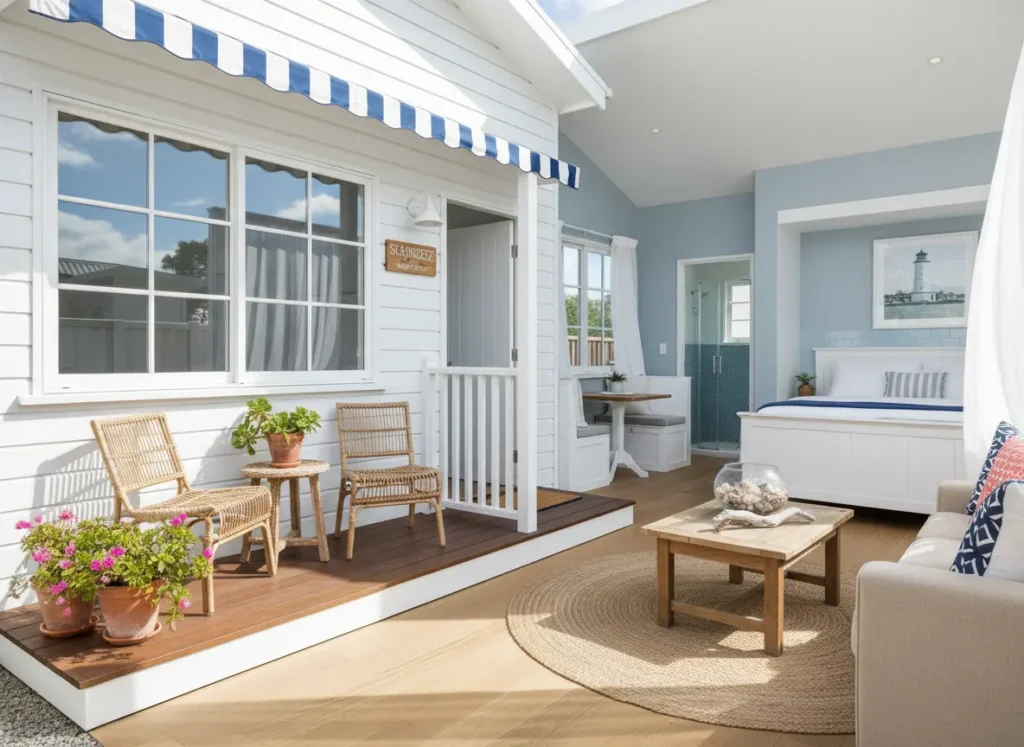
🧱 What building permits do you need for a granny flat?
You always need a building permit in QLD.
Even if you do not require planning approval, you must obtain construction approval.
✔ A certifier will check:
- Structural safety
- Plumbing and drainage
- Electrical compliance
- Building code standards
👉 Think of it as “safety approval before construction starts.”
🚗 What are the parking and access rules?
You must ensure safe access to the granny flat.
But parking rules vary by council.
✔ Typical requirements:
- Clear walking access path
- Safe entry point
- Optional parking space (not always required)
👍 What improves rental value:
- Dedicated parking
- Separate entrance
- Good lighting and pathway
🧍♂️ What are setback and privacy rules?
Setbacks are the minimum distance between your granny flat and boundaries.
They protect privacy and space between homes.
📌 Common setback rules:
- 1.5m to 2m from side boundaries
- 1.5m to 2m from the rear boundaries
✔ You may also need:
- Privacy screens for windows
- Frosted glass for side-facing rooms
🏠 Can you build a granny flat anywhere on your block?
No placement depends on zoning and space.
✔ Your block must:
- Be in residential zoning
- Have enough usable land
- Allow secondary dwelling use
🚫 You cannot build if:
- The block is too small
- Zoning does not allow secondary dwellings
- Flood or heritage restrictions apply
💡 What infrastructure charges apply in QLD?
Some councils may charge infrastructure fees.
These help fund local services like roads and drainage.
📌 Possible costs include:
- Infrastructure contribution fees
- Development charges (in some councils only)
👉 This rule does not always apply, but you should always check before building.
📋 Granny Flat Requirements QLD Checklist (IMPORTANT)
This is your quick homeowner checklist before building.
🟢 Legal requirements:
🟢 Design requirements:
🟢 Utility requirements:
🟢 Rental readiness:
📊 Granny Flat Approval Types in QLD
Approval Type | When Needed |
|---|---|
Building Permit | Always required |
Planning Approval | Depends on zoning |
Council Approval | If the rules are not standard |
Private Certifier | For construction certification |
💡 Is a granny flat worth building in QLD?
Yes — if your property supports it.
✔ Benefits include:
- Extra rental income
- Increased property value
- Flexible family living
- Long-term investment use
⚠ But depends on:
- Block size
- Council rules
- Build cost
- Location demand
🚀 Should you build a granny flat in QLD?
If your land allows it, yes — it is one of the strongest property upgrades in Queensland.
But the key is: 👉 Always confirm granny flat requirements QLD before designing or building. For designing, visit our guide on [Top Granny Flat Designs Perfect for Queensland Homes: 2026 Guide]