

Granny Flat Queensland Rules & Costs 2026: Full Guide
Secondary dwelling laws, approval steps, setbacks, costs & rental income — everything you need to know for QLD
Quick Facts — Granny Flat Queensland 2026
 Up to 80m²
Maximum size (Brisbane City Council)
Up to 80m²
Maximum size (Brisbane City Council) $80k–$250k
Typical build cost range in QLD
$80k–$250k
Typical build cost range in QLD $400–$600/wk
Rental income for a modern 2-bed flat
$400–$600/wk
Rental income for a modern 2-bed flat 4–6 months
Typical build timeline start to finish
4–6 months
Typical build timeline start to finishWhat Are the Secondary Dwelling Laws in Queensland?
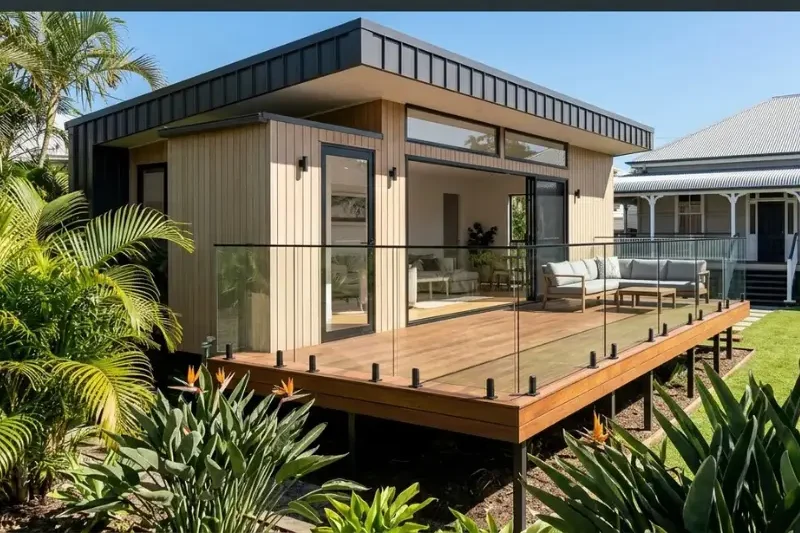
Secondary dwelling laws in QLD define how a granny flat can be built, used, and rented on a residential property. Queensland recently updated its state planning policy — and the biggest change affects who can live in your flat.
🏠 Rental Freedom
You no longer need to be related to your tenant. Queensland removed the “dependent person” restriction — your flat can now be rented on the open market to anyone. For the official state planning policy, visit the Queensland Government Planning website.
📐 Size Limits
Most councils, including Brisbane City Council, allow up to 80m² for a secondary dwelling. Regional areas may differ — always check your local council’s planning scheme.
📋 Same Land Title
The flat must remain on the same land title as the main house. You cannot subdivide and sell the granny flat separately under current QLD planning rules.
2026 Rule Change: Queensland’s updated state planning policy now allows secondary dwellings to be leased to private tenants on the open market — not just family or dependants. This single change has significantly increased the investment appeal of QLD granny flats.
Planning Permit vs Building Permit in QLD — What’s the Difference?
Many owners confuse planning approval with building approval. In Queensland, these are two separate processes — and you always need a building permit, even if planning approval is not required.

| Permit Type | What It Covers | Who Approves It | Always Required? |
|---|---|---|---|
| Planning Permit | Land use — whether a secondary dwelling is allowed on your block under the local planning scheme | Local council | Not always — may be exempt under “Accepted Development” rules |
| Building Permit | Structural safety, fire standards, NCC compliance — ensures the building is safe to occupy | Private certifier (Building Certifier) | Yes — always required |
Granny Flat Size Limits, Setbacks & Height Rules in QLD
Your land size and location determine where you can place the flat and how big it can be. Queensland is known for larger residential lots — but the rules are still strict. Get these right before you engage a builder.
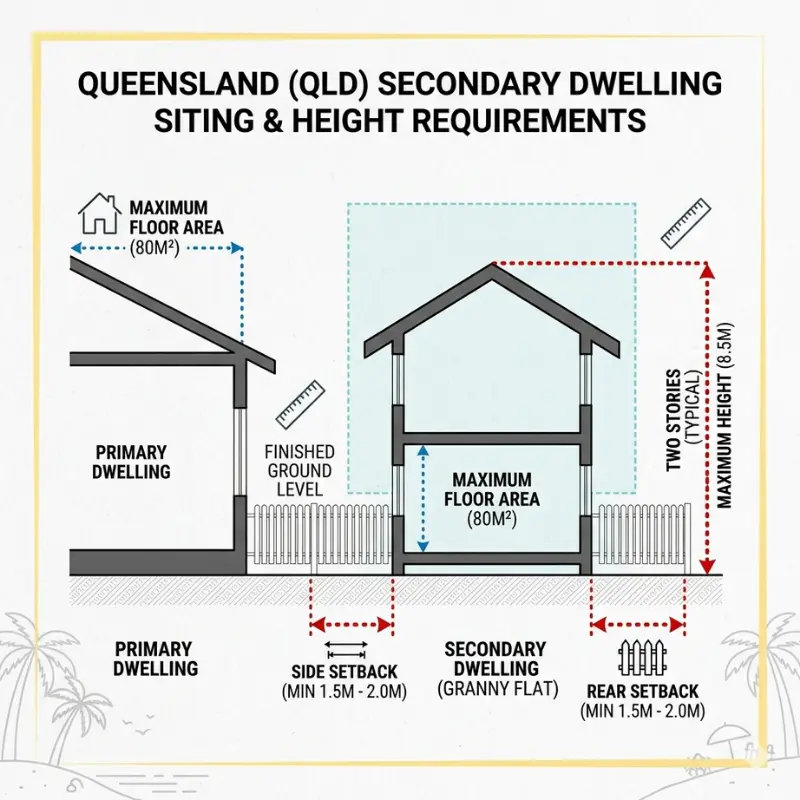
Brisbane City Council maximum. Regional councils may vary — always check your local planning scheme.
Minimum distance from side and rear boundaries. Ensures privacy for neighbours and access for maintenance.
Most secondary dwellings must stay under 8.5m or two storeys to avoid overshadowing neighbouring properties.
| Rule | Brisbane City Council | Gold Coast | Sunshine Coast |
|---|---|---|---|
| Maximum size | 80m² | Up to 80m² | 60m² (check zone) |
| Side setback | 1.5m minimum | 1.5m minimum | 1.5m minimum |
| Rear setback | 2m minimum | 2m minimum | 2m minimum |
| Max height | 8.5m / 2 storeys | 8.5m / 2 storeys | 8.5m / 2 storeys |
| Planning permit needed? | Not if Accepted Dev. | Check Town Plan | Check Town Plan |
How Much Does a Granny Flat Cost in Queensland in 2026?
Build costs in QLD have stabilised but remain significant. Brisbane metro pricing runs higher than regional areas like Rockhampton or Cairns. Here’s what to expect across all three build types.
- DIY-friendly flat pack
- Fastest to construct
- Limited design flexibility
- Best for rental yield focus
- Factory-built, site-assembled
- 30–50% faster than custom
- Good quality finishes
- Most popular choice in QLD
- Architect or draftsperson designed
- Full specification control
- Highest rental & resale value
- Best for premium suburbs
| Cost Category | Typical Range (QLD) | Notes |
|---|---|---|
| Base build cost | $80k–$250k | Depends on size, type, and finish level |
| Building permit (certifier) | $1,500–$4,000 | Private certifier fee — always required |
| Council planning fee (if needed) | $3,000–$10,000 | Only if planning approval required |
| Site preparation & earthworks | $3,000–$20,000 | Sloped blocks add significantly |
| Utility connections | $3,000–$12,000 | Water, sewer, electricity to main dwelling |
| Driveway & access path | $2,000–$8,000 | Often required by council |
| Landscaping & fencing | $3,000–$12,000 | Privacy fencing commonly required |
QLD Pro Tip: Always hold back at least 10% of your total budget for site works — plumbing, electricity, and earthworks are regularly underestimated in builder quotes. Get a full site assessment before signing any contract. For a full cost breakdown, see our national granny flat cost guide.
Why Is Queensland a Strong Market for Granny Flat Investment?
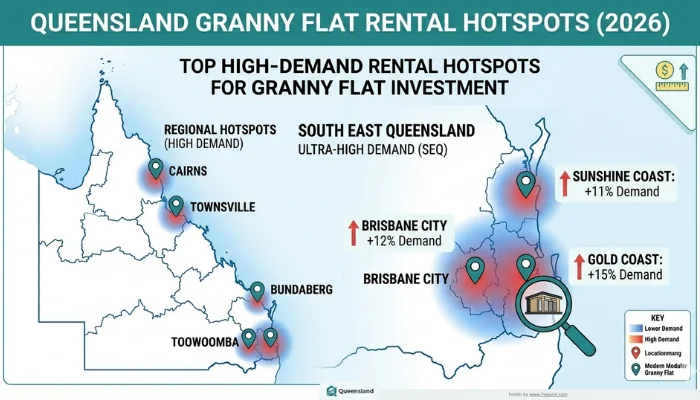
Queensland is facing a major housing shortage. That makes a well-built secondary dwelling one of the safest residential investments in Australia right now — particularly in Brisbane, the Gold Coast, and Sunshine Coast corridors.

📈 High Rental Demand
Coastal areas and Brisbane inner suburbs have very low vacancy rates. A modern 2-bedroom flat can generate $400–$600 per week in current market conditions.
💰 Strong Rental Yield
QLD granny flats consistently deliver 5–8% gross rental yields — well above the national residential average of 4–6%. Payback periods of 10–15 years are achievable.
🏡 Property Value Uplift
A well-built secondary dwelling can add $80,000–$150,000+ to your total property value. The project often pays for itself in combined rental income and capital growth.
Step-by-Step Construction Timeline for a QLD Granny Flat
A granny flat in Queensland typically takes 4 to 6 months from design to occupancy. The timeline varies by council area, build type, and site conditions. Here’s what to expect at each stage.
Design & Floor Plans
2–4 weeksEngage a draftsperson or designer to draw up your floor plan. At this stage, choose your build type — kit, modular, or custom. Your designer will ensure the plans meet QLD building codes and local setback rules.
Building Certification
3–5 weeksSubmit your plans to a private Building Certifier for approval. They assess structural safety, fire compliance, and NCC standards. If planning approval is also needed, allow additional time for council processing.
Site Preparation
1–2 weeksEarthworks, excavation, and underground service connections (water, sewerage, electrical conduit). Sloped or uneven sites take longer and cost more at this stage — factor this into your budget early.
Construction
12–16 weeksThe main build phase — slab pour, frame, lock-up, fit-out, and finishing. Modular builds can complete this phase faster (8–10 weeks) because components are prefabricated off-site. Custom builds take the full 12–16 weeks.
Final Inspection & Handover
1–2 weeksYour Building Certifier conducts a final inspection and issues your Form 21 (Final Inspection Certificate). Once received, the flat is legally occupiable and ready to rent. Keep this document — you will need it for lease agreements and insurance.
Frequently Asked Questions — Granny Flat Queensland
Ready to Build Your Queensland Granny Flat?
Builder quotes vary by 20–30% for identical designs. Get multiple quotes from licensed QLD builders before you commit — it’s free and takes a few minutes.
Get Free Builder Quotes →Builder-neutral — we don’t take commissions from builders.