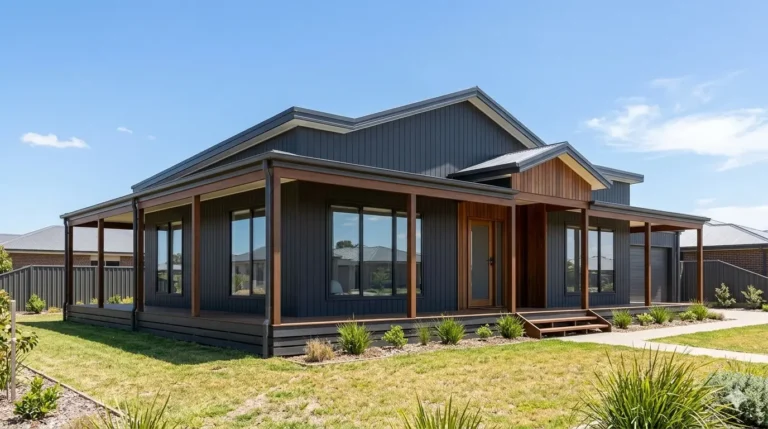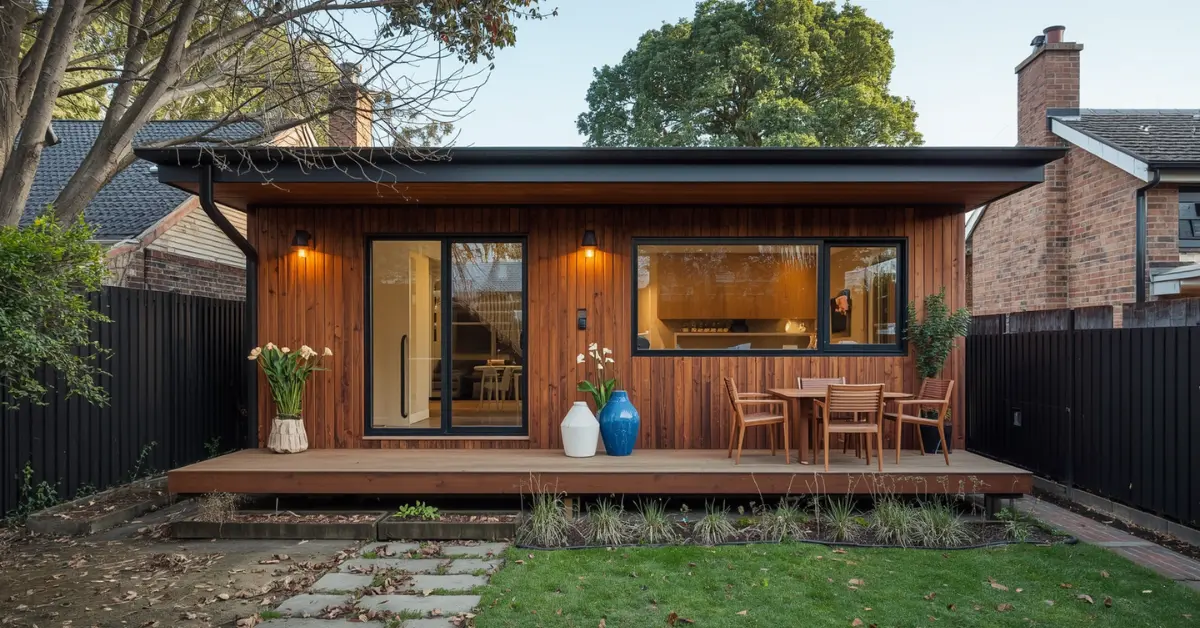
Granny Flat Cost Victoria 2026: What You’ll Actually Pay
Melbourne vs regional pricing, hidden costs, permit fees & Amendment VC253 explained — full VIC breakdown
Quick Facts — Granny Flat Cost Victoria 2026
 $95k–$320k+
Full price range across all VIC build types
$95k–$320k+
Full price range across all VIC build types 60m² Max
No planning permit needed under Amendment VC253
60m² Max
No planning permit needed under Amendment VC253 $18k–$40k
Typical hidden costs on top of builder quote
$18k–$40k
Typical hidden costs on top of builder quote 12–20%
Melbourne trade rates above regional VIC
12–20%
Melbourne trade rates above regional VICHow Much Does a Granny Flat Cost in Victoria in 2026?
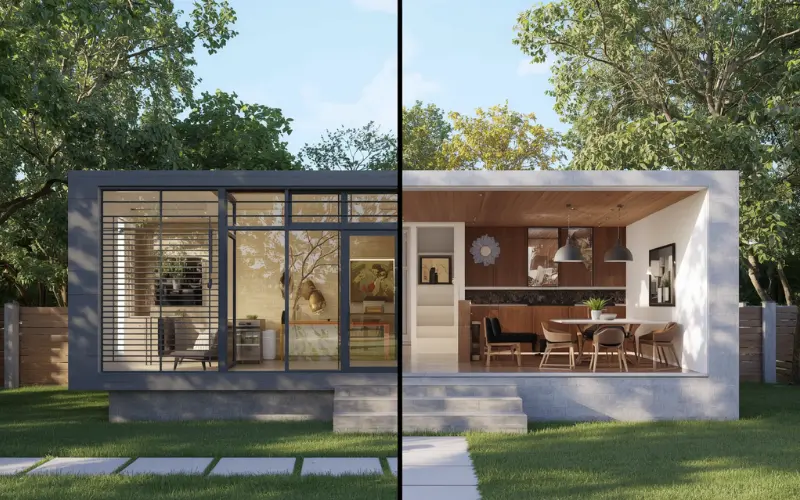
Most Victorian granny flats cost between $95,000 and $320,000 — a wide range driven by size, site conditions, finish level, and whether you’re building in Melbourne or regional VIC. Here’s what to expect at each level.
- Factory-built, delivered to site
- Fastest construction time
- Standard finishes only
- Best for flat, accessible blocks
- Most popular choice in VIC
- Good quality finishes
- Full design flexibility
- Suits Melbourne suburban blocks
- Architect or draftsperson led
- Premium finishes throughout
- Highest rental & resale value
- Complex sites or sloped blocks
| Size | Typical Cost Range (VIC) | Best For | Notes |
|---|---|---|---|
| Up to 40m² | $95k–$140k | Studio / 1-room | Modular suits this size well |
| 40–50m² | $120k–$180k | 1-Bedroom | Most common size in Melbourne |
| 55–60m² | $160k–$260k | 2-Bedroom | Maximum under VC253 no-permit rule |
| 60m²+ (custom) | $220k–$320k+ | 2-Bed premium | Planning permit required over 60m² |
What Drives the Price Up or Down in Victoria?
Most homeowners underestimate how much site conditions and VIC-specific requirements add to a builder’s base quote. These six factors are the biggest cost variables on Victorian builds.
🏔️ Reactive Clay Soil (Melbourne)
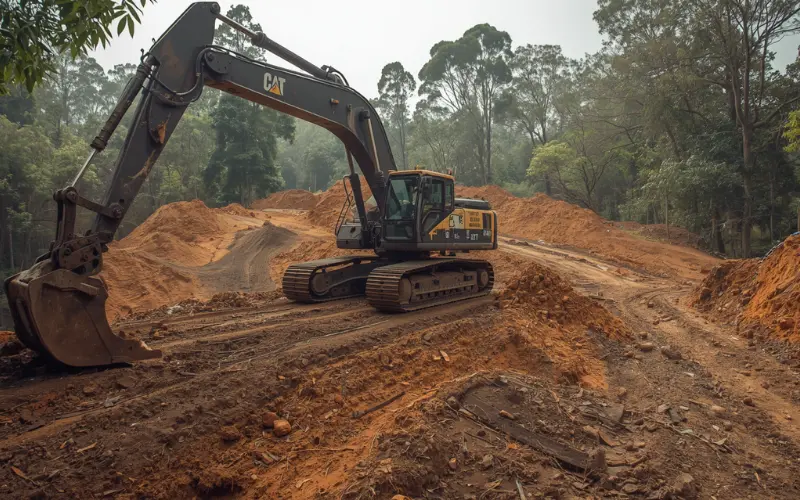
+$6,000–$11,000Melbourne’s western and northern suburbs have reactive clay soil (Class H or E). This requires deeper, engineered footings — and your soil report will trigger it. Budget for it before you get a quote.
⚡ NatHERS 7-Star Energy Compliance
+$8,000–$20,000As of May 2024, new dwellings in VIC must achieve 7-star NatHERS. Melbourne’s cold climate makes this harder to achieve on a small footprint — double glazing, upgraded insulation, and heat pump hot water are often required.
🔥 Bushfire Attack Level (BAL) Rating
+$12,000–$28,000Regional VIC builds on bushfire-prone land need BAL-rated construction. Moving from BAL-12.5 to BAL-29 adds significant cost in glazing, shutters, decking materials, and sarking. Check your property overlay before budgeting.
🏗️ Site Slope & Access
+$5,000–$25,000Sloped blocks require cut-and-fill earthworks or retaining walls. Tight side access in Melbourne’s inner suburbs (less than 3.2m) can mean no concrete truck access — a pumped slab pour adds $2,500–$4,000 alone.
💧 Stormwater Detention
+$5,000–$10,000Some Melbourne councils require on-site stormwater detention tanks when you add impervious area to a block. This includes a tank, pit, and hydraulic design report — rarely mentioned in builder quotes.
🔧 Services Connection
+$8,000–$17,000Connecting water, sewer, electricity, and gas to the granny flat is almost never included in a builder’s base price. A separate electrical supply is required under Victorian regulations if renting to a tenant.
Melbourne vs Regional Victoria — Cost Comparison
Melbourne metro trade rates run 12–20% above regional Victoria across carpentry, plumbing, and electrical. But regional builds have their own cost loading — bushfire ratings and long service runs can close the gap quickly.
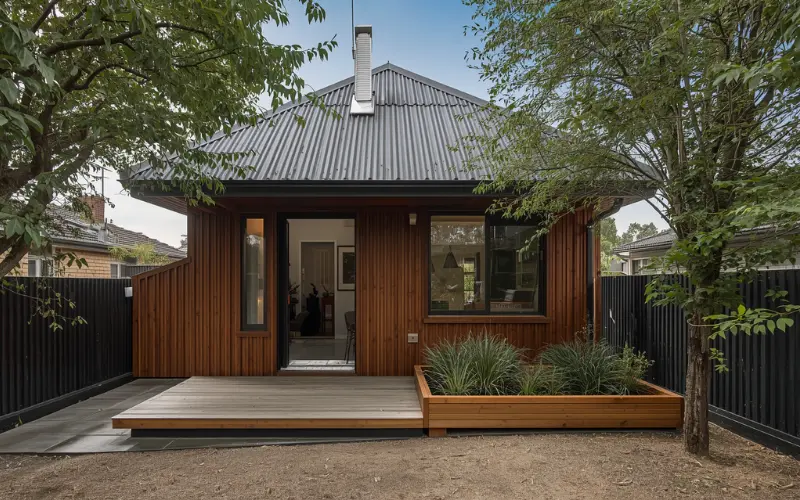
What Fits in 60m²? VIC Floor Plan Guide
Under Amendment VC253, 60m² is the magic number in Victoria — stay at or under this and you likely won’t need a planning permit. A well-designed 60m² comfortably fits a 2-bedroom layout with kitchen, bathroom, and living area.
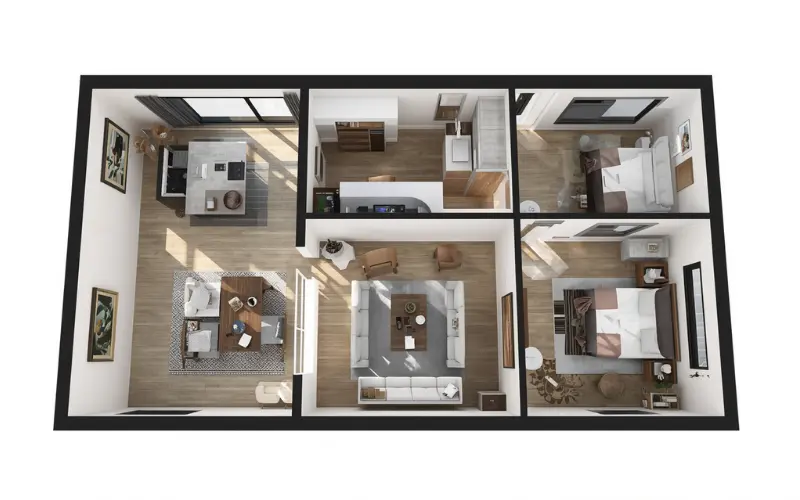
📐 Stay at 60m² or Under
The 60m² limit under Amendment VC253 is measured as gross floor area. Stay under this threshold and you avoid the planning permit process — saving $3,000–$8,000 in council fees and months of waiting.
🏠 Livable Housing Standards
Under NCC 2022, new VIC secondary dwellings must meet Livable Housing Design Standards — step-free entry, wider doorways, and reinforced bathroom walls for future grab rails. Design these in from the start; retrofitting costs more.
🌿 No Minimum Lot Size in VIC
Unlike NSW (450m² minimum), Victoria has no minimum lot size for a small second home. Your main constraint is your zone, any overlays, and the setback rules — not the block size itself.
Permit & Approval Costs in Victoria
Amendment VC253 (December 2023) changed the game in Victoria — most 60m² or under small second homes no longer need a planning permit. But a building permit is always required, and there are several approval costs most homeowners miss.
Amendment VC253 — The Key Rule Change: Since December 2023, a small second home (granny flat) of 60m² or less no longer requires a planning permit in most Victorian residential zones — provided no flooding, heritage, or bushfire overlays apply. A building permit is still always required. Verify your property on the Planning Victoria website.
| Approval Item | Typical Cost | Always Required? | Notes |
|---|---|---|---|
| Building Permit | 1–1.5% of build cost | ✅ Always | Via private building surveyor — covers structural safety, NCC compliance |
| Planning Permit | $3,000–$8,000 | Not always | Only if over 60m², overlay applies, or heritage site |
| Engineering Reports | $500–$3,000 | Usually | Structural and soil engineering — often required by surveyor |
| NatHERS Energy Report | $400–$1,200 | ✅ Always | 7-star minimum required as of May 2024 in VIC |
| Soil / Geotechnical Test | $300–$1,500 | Usually | Essential on Melbourne clay soils — determines slab type |
| BAL Assessment (regional) | $500–$1,500 | If bushfire zone | Required before design can be finalised in bushfire-prone areas |
| Home Warranty Insurance | Varies by build cost | ✅ If build >$20k | Mandatory from July 2026 — builder must purchase on your behalf |
How to Reduce Your Victoria Granny Flat Build Cost
Smart decisions before you break ground consistently deliver the biggest savings. These six strategies are specific to the Victorian market — not generic advice that applies anywhere.
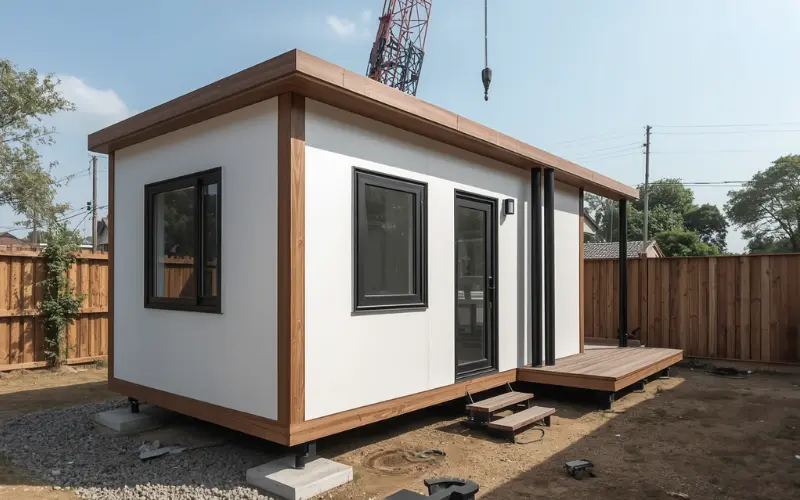
Stay at 60m² or Under
The planning permit exemption under Amendment VC253 saves $3,000–$8,000 in council fees and 8–16 weeks of wait time. Design to 58–59m² to stay safely under the threshold.
Get a Soil Test First
A $500 soil test before you engage a builder tells you exactly what slab you need. Without it, builders quote Class M (cheapest) — and you find out about the $8,000 upgrade after you’ve signed.
Use Modular on Flat Blocks
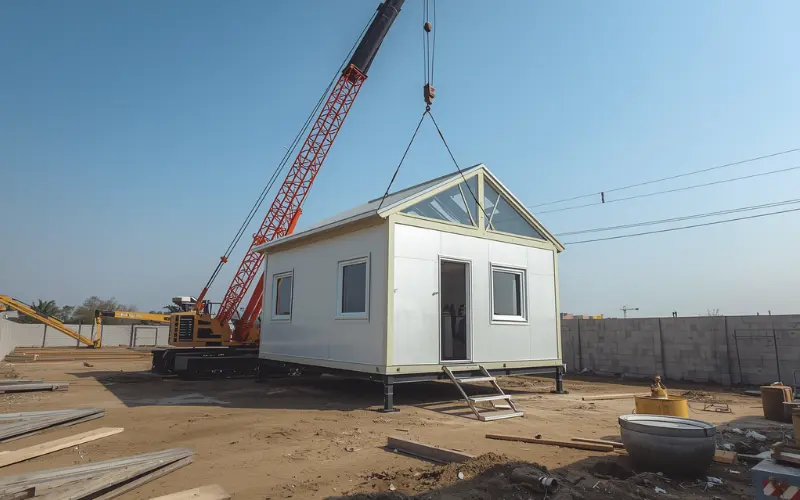
A modular build on a flat, well-serviced Melbourne block is the most cost-effective path. Avoid modular on tight access blocks — crane costs and access fees can eliminate the saving entirely.
Design for 7-Star from Day One
Designing for NatHERS 7-star compliance from the start is 40% cheaper than retrofitting. Correct window orientation, thermal mass, and insulation spec from day one — don’t let the builder use defaults.
Share Services Where Possible
Sharing water and power connections with the main dwelling saves $5,000–$10,000. Note: a separate electrical supply is required if renting to a tenant — factor this into your plan early.
Get 3 Turnkey Quotes — Not Base Prices
Always compare turnkey (fully finished, all-inclusive) quotes. A “$95,000 kit flat” becomes $160,000+ once slab, connections, permits, and landscaping are added. Compare apples with apples.
Frequently Asked Questions — Granny Flat Cost Victoria
Ready to Get Accurate Victorian Quotes?
VIC builder quotes vary by 20–30% for identical designs. Compare at least three licensed Victorian builders before you sign — and always ask for a turnkey price, not a base price.
Get Free Builder Quotes →Builder-neutral — we don’t take commissions from builders.