NSW Granny Flat Approval 2026: CDC vs DA Secrets🏡

Ready to build a granny flat in NSW? Your first big decision isn’t the design. It’s the NSW granny flat approval rules — specifically, which pathway you need.
You have two options: a fast-track CDC or a full council DA. Pick the right one, and you save weeks, sometimes months. Pick the wrong one, or skip this step, and you risk delays and wasted design fees.
This guide helps you discover whether you need a fast CDC or a full DA, plus real 2026 costs, timeframes, and pitfalls to avoid.

What’s the Difference Between DA and CDC for a Granny Flat? 🔍
A CDC (Complying Development Certificate) is a fast, fixed-rules approval. A DA (Development Application) is a slower, council-assessed approval for projects that don’t fit the CDC rules.
Most standard granny flats in NSW qualify for CDC. You only need a DA if your site or design violates a fixed standard. We’ll walk through both pathways below, then help you work out which one fits your project.
Which Pathway Applies to Your Granny Flat? 🛠️
Answer these four questions. They’ll point you straight to your pathway:
- 📐 Is your lot 450m² or bigger? If no, you likely need a DA.
- 🏠 Is your granny flat 60m² or under? If no, you likely need a DA.
- 🚨 Is your site flood-prone, heritage-listed, or high bushfire risk (BAL-40+)? If yes, you likely need a DA.
- 📏 Does your design meet the standard setbacks and height limit? If no, you likely need a DA.
Answered yes to the first two and no to the last two? You’re likely CDC-eligible. Any “wrong” answer usually pushes you to a DA.

What is a CDC (Complying Development Certificate)? ⚡
A CDC combines your planning and building approval into one certificate. A private certifier checks your plans against a fixed rulebook, not a council planner’s opinion.
If your plans tick every box, approval is fast and close to guaranteed. There’s little room for judgment calls either way. Most CDC applications for granny flats don’t need neighbour notification. That’s one more reason this pathway moves so much faster than a DA.
For the full step-by-step CDC process, see our NSW Granny Flat CDC Checklist.
To check the specific state environmental planning policies for your property, you can visit the official NSW Planning Portal.

What Is a DA (Development Application)? 🏛️
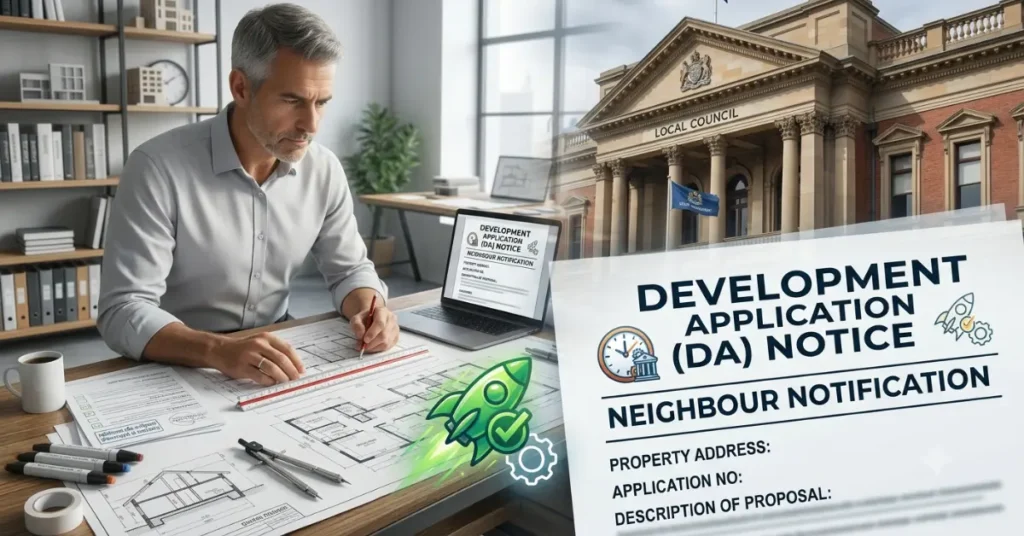
A DA is a full council assessment. It applies when your granny flat doesn’t meet one or more CDC standards.
Common triggers include a small or narrow lot, a flood or bushfire-prone site, a heritage overlay, or a design that breaks setback or height rules. A council planner reviews your application on its merits, not just against a checklist. Neighbours usually get notified, and you may need extra reports, like a bushfire assessment or heritage report.
This pathway gives you more design flexibility. But it costs more, and it takes far longer.
CDC vs DA: Cost and Timeframe Comparison 📊
Factor ⚙️ | CDC Pathway ⚡ |
|---|---|
Timeframe | 10–20 business days |
Typical Cost | $3,000 – $5,000 |
Assessed By | Private certifier |
Neighbour Notification | Usually not required |
Design Flexibility | Low — must meet fixed rules |

What Disqualifies You From the CDC Pathway? ⚠️
A handful of site and design factors rule out CDC. Check these before you fall in love with a design:
- 🧱 Small lot – under 450m² usually fails CDC
- 📏 Narrow frontage – under 12m width at the building line
- 🌊 Flood-prone land
- 🏛️ Heritage-listed property or area
- 🔥 High bushfire risk – BAL-40+ rating
- 📐 Oversized design – over 60m² internal or 8.5m in height
- 🪵 Tight setbacks – less than 3m at the rear or 0.9–1.5m at the side
Hit any one of these, and you’ll likely need a DA instead.
What’s Changing in 2026? 📅
The NSW Government is reviewing the CDC system right now. The goal is a fairer, faster process for smaller design tweaks.
A new “CDC variations” pathway is on the table. It would let minor departures from the standard rules get a quicker assessment, instead of forcing a full DA. This proposal went out for public feedback in mid-2026. Keep an eye on updates, since it could open the CDC path to more designs later this year.
Final Thoughts: Know Your Pathway Before You Design 🏁
Most NSW granny flats qualify for the fast CDC pathway. A few site factors, like a small lot or a bushfire rating, push you to a DA instead. Understanding the granny flat approval NSW rules early saves you real time and money.
Work out your pathway first. Then design around it, and you’ll avoid costly surprises later.
Ready for the next step? Check our NSW Granny Flat CDC Checklist, Granny Flat Requirements NSW, and NSW Granny Flat Cost guides.