5 Essential Questions to Ask a Granny Flat Builder Before Signing a Contract

Building a granny flat is a significant investment. While the design and price might look great on paper, the success of your project depends entirely on the builder you choose. In Australia, where building regulations are strict, asking the right questions upfront can save you from $20,000+ in hidden costs or legal headaches.
Before you sign any legally binding contract, make sure you ask these questions to a granny flat builder.
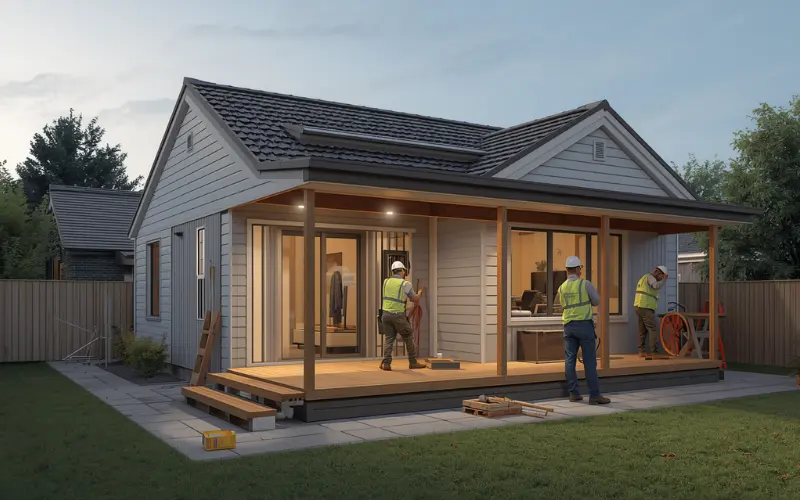
1. Are You a Licensed Builder and Do You Have Home Building Compensation Fund (HBCF) Insurance?
This is the most critical question. In Australia, any residential work over a certain value (e.g., $20,000 in NSW) requires the builder to have specific insurance.
- Why it matters: If your builder isn’t licensed or insured, you are not protected if the work is faulty or if the builder disappears mid-project.
- Pro Tip: Don’t just take their word for it. Ask for their license number and verify it on your state’s “Fair Trading” or “Service” website.
2. Is Your Quote “Fixed-Price” or a “Prime Cost” Estimate?
Many homeowners get trapped by a low initial quote, only to find out later that “site costs” or “council fees” weren’t included.
- Fixed-Price: This means the price won’t change unless you request a design change.
- Prime Cost (PC) / Provisional Sums: These are “placeholders” for items such as tiles or taps. If the actual cost is higher, you pay the difference.
- The Goal: Aim for a fixed-price contract that includes site preparation, utility connections, and council fees to avoid budget blowouts.
3. Who Handles the Council Approvals (CDC or DA)?
Navigating the council can be a nightmare. You need to know if the builder will manage the paperwork or if you are responsible for it.
- The Process: A professional granny flat builder should ideally handle the entire process—from the initial site survey to obtaining the final Occupation Certificate (OC).
- Check: Ensure their fee covers the costs of the private certifier or council application.

4. What is the Estimated Timeline and What Happens if There Are Delays?
Construction delays are common, but they should be managed.
- The Contract: A standard building contract should specify a start date and a completion date.
- Liquidated Damages: Ask if the contract includes a clause for “liquidated damages.” This means the builder might have to pay you a small daily amount if they exceed the completion date without a valid reason (like bad weather).
5. Can I See Your Recently Completed Projects and Speak to Past Clients?
A good builder will always be proud to show off their work.
- What to Look For: Ask to see a granny flat that was finished 12-24 months ago. This allows you to see how the materials and finishes are holding up over time.
- Client Feedback: Ask previous clients if the builder stayed on budget and how they handled issues during the build.
Why These Questions to Ask a Granny Flat Builder Protect Your Investment
Asking the right questions to ask a granny flat builder is not just about getting a lower price. It is about transparency and safety. Many homeowners face stress because they skip this stage and sign a contract too quickly. By using this list, you ensure that your builder is honest about site costs, timelines, and legal approvals. This simple step can be the difference between a smooth project and a legal headache.
In Australia, builders must provide Home Building Compensation (HBC) cover for projects over $20,000.
Frequently Asked Questions (FAQs)
Conclusion: Don’t Rush the Signature
Signing a contract is the point of no return. A reputable builder will never pressure you to sign quickly. Take your time to review these answers, and if something feels “off,” it’s better to walk away before the first brick is laid.
Related Reading: Ready to start? Check out our [Step-by-Step Guide to Building a Granny Flat in 2026]for a complete project overview.