Granny Flat Privacy Ideas 2026: Best WA Backyard Layouts
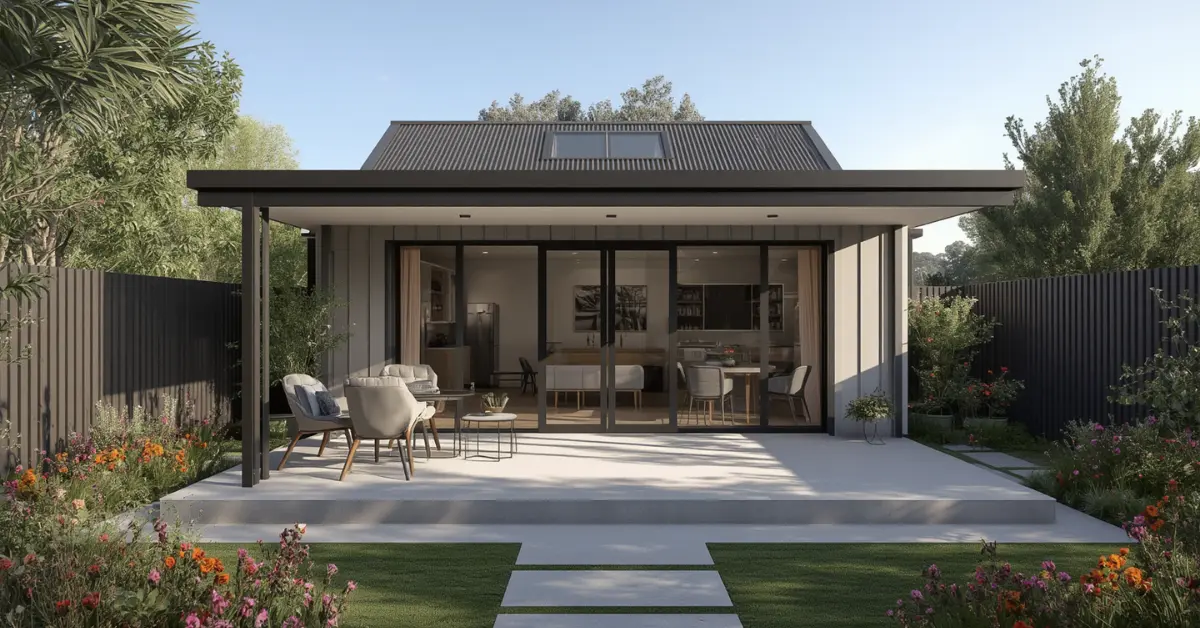
Building a granny flat in your WA backyard is exciting. But privacy is often the first thing that goes wrong.
You don’t want to look straight into your tenant’s window. And they don’t want to feel watched either.
The good news? Smart design fixes this. The right layout, fencing, and screening give everyone their own space.
This guide shares the best granny flat privacy ideas for WA homeowners. You’ll also learn the local rules you must follow before you build. 📋
What’s the Best Layout for Granny Flat Privacy in WA? 📐
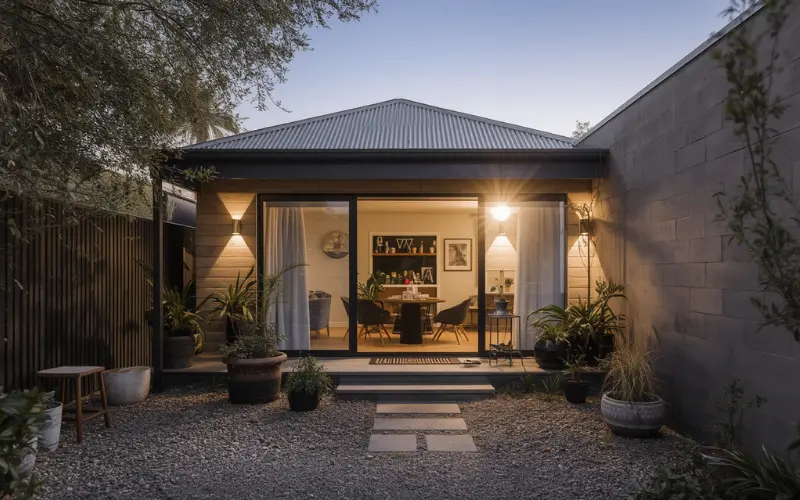
The best layout places the granny flat at the rear of your block, with windows and doors facing away from the main house. This creates two separate zones and stops overlooking.
A clear divide works best. You want each home to have its own entry, outdoor space, and sightlines.
Below, we break down the top backyard layouts and how each one protects your privacy.
Why Does Privacy Matter for Granny Flats in WA? 🤫
Privacy keeps the peace. It protects both your comfort and your tenant’s, especially when two homes share one block.
In WA, privacy isn’t just a nice-to-have. It’s part of the building rules.
Poor privacy design can also cost you money. A layout that overlooks a neighbour may fail the R-Codes and need expensive changes.
Good privacy adds value, too. Renters pay more for a private, self-contained space that feels like a real home.

How Far Must a Granny Flat Be From the Boundary? 📏
In WA, your granny flat must meet the setback rules in the R-Codes. The exact distance depends on your block’s density code and wall height.
A granny flat (called an “ancillary dwelling” in WA) must be no more than 70m² inside. It also sits behind the front line of your main house.
Since April 2024, most compliant granny flats up to 70m² no longer require planning approval. But you still need a building permit, and you must still meet setback and privacy rules. ☑️
See our full WA Granny Flat Requirements guide for the exact setback tables.
What Privacy Rules Must You Follow in WA? 🔍
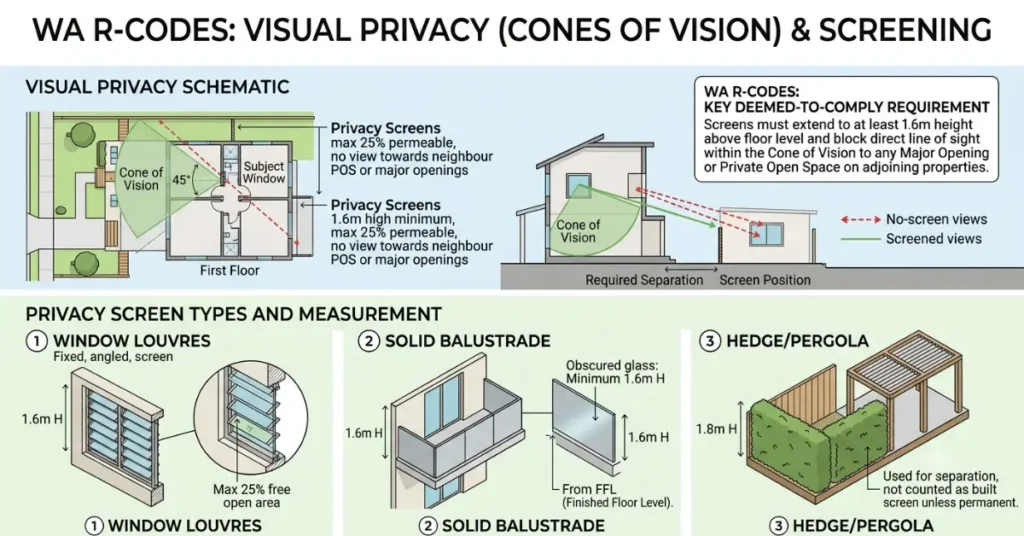
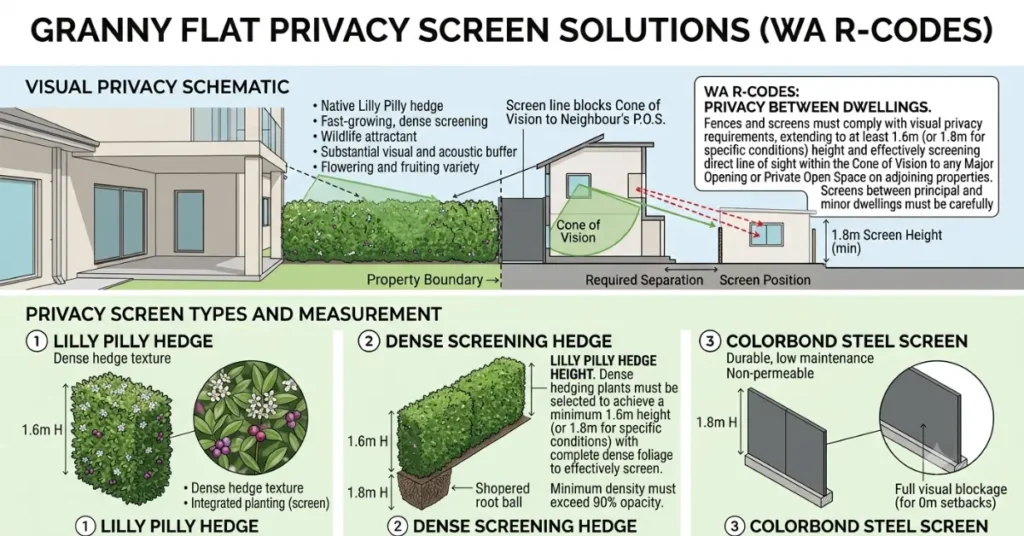
WA uses the “cone of vision” rule to stop overlooking. Any window or outdoor area is checked within a 45-degree line of sight to a neighbour’s private space.
These are the key visual privacy rules under the R-Codes:
Rule 📋 | What it means 💡 |
|---|---|
Cone of vision | Overlooking is measured within a 45-degree arc from a window or balcony. |
Screen height | Privacy screens must sit at least 1.6m above the finished floor level. |
Screen gaps | Screens can be no more than 20% see-through (visual permeability). |
Privacy setbacks | Habitable room windows often need 6m–7.5m clearance to a neighbour’s living areas, based on your density code. |
Important: setbacks alone won’t always pass. ⚠️ You may still need screens, louvres, or frosted glass to block sightlines.
Rules can change between councils.🏛️ Always check your local council and the current WA Government Residential Design Codes R-Codes before you finalise your design.
What Are the Best Backyard Layouts for Privacy? 🏡
The best Granny Flat privacy ideas WA separate the two homes with space, fencing, or planting. Your block shape decides which one fits.
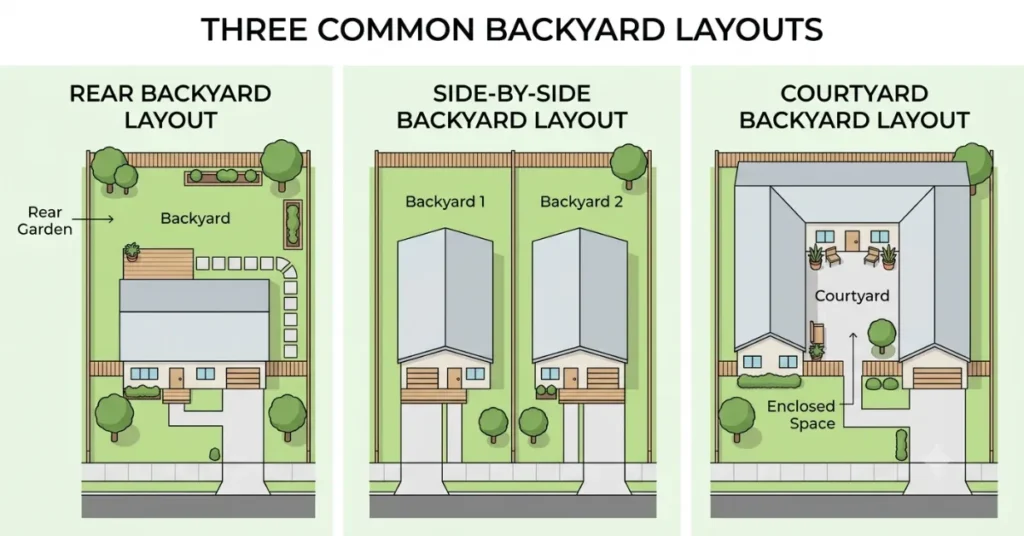
Here are the three layouts that work best for granny flat backyard design.
1. Rear-of-Block Layout 📍
This is the most private option. You place the granny flat at the back, facing away from the main house.
A separate path or side access keeps foot traffic apart. Each home gets its own quiet zone.
2. Side-by-Side Layout 🚗
Here, both homes sit beside each other, often sharing a driveway. It suits wide blocks.
Use a dividing fence and offset the windows so they don’t line up. This stops the two homes from looking into each other.
3. L-Shaped or Courtyard Layout 🪵
This layout wraps the homes around a split or shared courtyard. It works well on tight or square blocks.
Angle the windows and add screening to give each side a private outdoor nook.
Layout 🏡 | Privacy level 🔒 |
|---|---|
Rear-of-block | High |
Side-by-side | Medium |
L-shaped / courtyard | Medium–High |
What Fencing Improves Granny Flat Privacy? 🧱
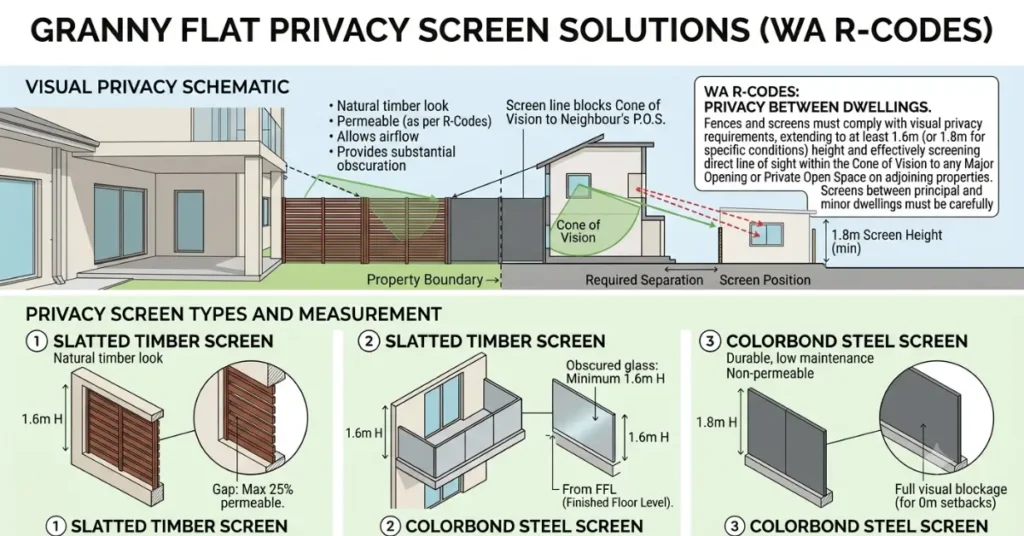
A solid divide fence is the fastest privacy fix. It separates the two homes and blocks ground-level sightlines.
Good options include:
- Colorbond fencing for a clean, solid barrier
- Slatted timber or aluminium screens for airflow with privacy
- Lattice toppers to add height where the rules allow
Remember the 1.6m screen-height rule for any screen used to block overlooking. 📏
Which Plants Give Natural Screening in WA? 🌿
Hardy, fast-growing plants give privacy without blocking light. They soften the look and suit WA’s dry climate.
🌿 Top screening choices for WA backyards:
- Lilly Pilly – dense, fast, and great as a hedge
- Clumping bamboo (not running) – tall and quick
- Pittosporum – thick evergreen screen
- Star Jasmine on a trellis – perfect for narrow spaces
Pick drought-tolerant plants to handle Perth’s hot summers and water limits. ☀️💧
How Does Window and Door Placement Boost Privacy? 🪟
Smart window placement is one of the best granny flat privacy ideas. Face the main windows and doors away from the other home and the neighbours.
🚪 Use these simple tricks:
- Put bedrooms and bathrooms on the screened or boundary side
- Use high clerestory windows for light without sightlines
- Add frosted or obscure glass where windows face a fence
- Place the front door on the opposite side of the main house
This keeps both homes bright, private, and compliant. ✨
Final Thoughts: Plan Privacy Before You Build 🏁
The best granny flat privacy ideas start at the design stage, not after. Choose the right layout, then add fencing, planting, and smart windows.
Get the privacy right, and you protect your comfort, meet the R-Codes, and lift your rental value.
Ready to plan your build? Check our WA Granny Flat Requirements and WA Granny Flat Cost guides next.